Thursday May 9th - Wednesday May 15th 2019
The 6 days of Hungary on the shore of Lake Balaton have, over the past decade or so, become the place to be for 6-day runners. You usually find a good chunk of the discipline's top names there, and the course is reputedly very fast, so it's easier to wrap up a strong performance.
I'm getting ready for a double-deca ironman so I need races to warm me up a bit, and this is ideal. I'll be able to log lots of kilometres, the full logistics will be in place, friends, and pacers to make a real race of it. Perfect.
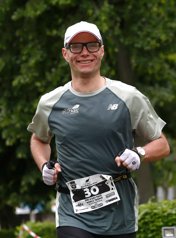
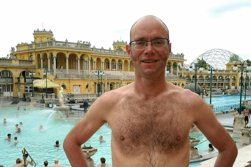
Absolutely, totally unable to make sense of their cryptic website in Hungarian, I decided to rent a car to drive from Budapest to the start, which would also let me, on the return trip, stop for a soak in one of the countless natural hot-water pools — a great way to decompress, I think.
Anyway, for now we settle into our bungalow, three of us. Me, Marc, and a very friendly Belgian. I looked at the starting list and there are heavy hitters, but the one who seems most likely to win is Tiziano Marchesi, whom I'd met at the 48h of Royan in 2017 and who, hmm, how to put it, moves fast. There is also Dan Lawson, the Englishman, who is a bit new to the "6-day distance" but otherwise has a wild track record — clearly no rookie, he'll have to be reckoned with. Then Sten Orsvärn, a Swede with very strong credentials, particularly over 48h. And others, for example Johan van der Merwe, whom I had met in South Africa in 2015. And surely others I haven't spotted — there are always new talents, that's what's lovely about it.
I'm mostly here to prepare for my October triathlon, so I'll take advantage of the logistics, the friends, and all those potential pacers, who will be my motivation to stack up as many miles as possible. If I land a placing on top of that, it's a bonus, but it's not what I came for. If it were, I wouldn't have done a 400 km (248 miles) cycling brevet 4 days before. Either way, one thing is certain: I'll give it everything!
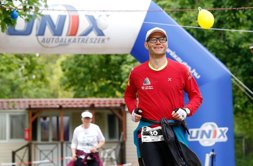
And to give it everything this year is simple — no need to try hard. Because while Hungary in May usually means the first heat waves, with runners complaining about getting their faces beaten in by 86°F (30°C), this year we had, in order: rain, rain, and more rain. Magic.
I'm exaggerating a bit, because on some days the rain was replaced by a wind that could blow the horns off an ox. Let me dwell for a moment on this beautiful French expression: "un vent à décorner les boeufs". I always thought it meant the wind was so strong it would blow off cows' horns. But apparently the real origin is that, for some reason, people wanted to dehorn their oxen. And if you do it in full sun when there's no wind, flies stick to the wounds and your ox dies. So it's better to do it on a breezy day — no flies, the wounds stay clean, dry out fast, super hygienic. I have no idea whether it's an urban legend, sorry, a rural one, but the story is funny. I still prefer the horns-flying-off version though. It's wrong but more fun. Since when do we care about truth?
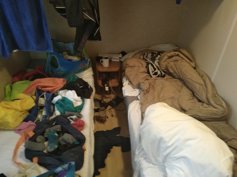
What worries me right now are my feet. I've been struggling with creeping plantar fasciitis — the soles of my feet have been painful for several weeks. To cope, I put insoles in my city shoes for better cushioning and less stress; it helped, but it's far from perfect. And so the cycling outing the weekend before pretty much wrecked my legs — fortunately this Thursday morning I'm "roughly OK". My legs hurt until Tuesday, on the plane on Wednesday it started easing, and now I'm almost as good as new. Curiously, these foot pains will never bother me during the race. They disappeared. And didn't come back afterwards. Interesting.
Anyway, as usual, I take a very cautious start. Up front, the heavy hitters lead the dance. The South African will be the first to crash and burn, after about a day and a half. The others look serious. The Englishman and the Italian aren't here for knitting club.
Pretty quickly I focus on my own race and end up paying little attention to the others. I laugh a lot with the French runners, men and women. A nice little moment where I explain to Pascale and Béa that yes, I listen to Mongolian rock but also and especially unheard-of, improbable songs like Pour l'amour d'un dauphin by Daphnièle. I could talk about it for hours — I love this offbeat music, and not just ironically. I have a real soft spot for those people who dare, ultimately, to sing freely, to share their creations. There are others, among the "famous" (it's all relative...) in the niche, like Michel Farinet or Francis Sarlette, who in different styles do what they have to do and don't really care, well, frankly really don't care, what others think. And it's refreshing. Believe it or not, listening to this kind of light, no-pretensions music puts me in a good mood, and in a good mood, I go faster, and further.
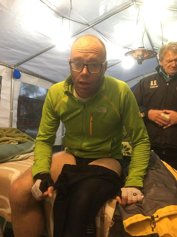
I have a very clear memory, during this race, of losing endless time when waking up. I can still see myself staring at my bed like an idiot, for 5 to 10 minutes. Awake, eyes open, unable to act. This is where a crew member makes a difference. Any of my usual crew would have kicked my butt and I'd have left much faster. But here, over the days, waking up gets incredibly hard. To be fair I'm not the only one struggling — others will lose actual hours. I get off easy, with a few miles lost each day, but no more. 2 miles a day is both huge and very little. It's all about perspective.
There was also a memorable evening, where I did quite a bit of "racing" sandwiched between the Swede Sten Orsvärn ahead of me and Fernando Soriano Rubio behind. I had a tremendous time. It was a real competitive atmosphere, each of us tracking the other's moves; we were moving well, unable to threaten the top two overall, but still, a good pace. I wanted to tell Fernando, "hey, maybe you should ease off a bit, because with Sten ahead, we're going fast..." and obviously I said nothing. He was 5th, I was 4th, not really in a position to tell him to slow down. Still, he blew up in the middle of the night, so I wasn't entirely wrong. He tried, and he was right to do it, I think.
The unfavourable weather soaks everything, absolutely everything. Some competitors told me their clothes were drenched without ever wearing them — just sitting in the bungalow, packed in a bag, they ended up completely damp. Some bungalows were heated, others not. At one point my bungalow mates tell me that since my room is heated, it would be nice if I opened my door so everyone could enjoy the warmth. Easygoing as I am, I leave my door open. But the bungalow doesn't get any warmer. It's just that, being a bit off to the side, my room caught less of the outside cold — clearly not heated. I was lucky to be able to rely on my very warm sleeping bag (rated to 14°F / -10°C by the maker) which I had tested on the Appalachian trail in 2018.
At one point, Didier, very kindly, offers to dry my clothes because he actually has heat. I refuse at first, then accept. As I hand him my "warm tank top" (ahem), he's surprised because it's a real mop — totally soaked with water and sweat, weighing its weight. Someday I'll expand my wardrobe to include actual warm, water-resistant clothes. Sometimes I dabble in amateurism.
I also tried an interesting experiment in this race — I tested the massage table for you. It will sound silly, but I never go on the massage tables, I don't really like it a priori, and my reasoning has always been "10 minutes lost at the masseur is 10 minutes lost". But this time, knowing I'd started the race a bit worn from my cycling outings, that I don't really have a serious objective here, and that you only live once, I tell myself if there's one 6-day to give it a try, this is the one. After all, runners much faster than me sometimes stop there, so why not.
Verdict: it's not unpleasant, and the guy doing it there knows his stuff, I think. So you leave a bit better than you came in. Which is nice. As for getting your time's worth, I have my doubts. Except in cases of major demotivation or injury, I don't see how you can make up, on the track, all the time lost lying still while your legs get fiddled with. Now I know — I shouldn't stop there, except in exceptional cases.
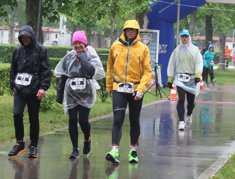
And the race goes on, and the Swede stays well ahead of me. On the last night, I decide to go all in, and I attack. I try not to give an inch, I run as much as I can, but the rascal holds on. He resists. I insist. And finally, I think it was around 3 or 4 in the morning of the last night, I ended up blowing up, completely. I really popped a fuse — dazed in the middle of the track, Christian knocked out. I feel I'm walking very slowly, I need to recover. I hesitate to go to my bungalow but it's cold, and I'm afraid of waking up alone in there and being a bit short on "pep" if you see what I mean. So I stop at the masseur's, because under his tent it's heated. I get a token little massage, and mostly I doze a bit — I'm fried.
The French friends find me in the morning, apparently it shows a bit that I'm tired. I think I tried just about everything to scrape 3rd place, but this time it didn't happen. It happens — I'll bounce back in Mexico at the double-deca.
The last day of racing, on my side, is essentially walking. The Swede is too far ahead to catch now. And behind me, no threat. I have a 100 km (62 miles) race in a few days so I'll avoid any silly injury. I'll be able to finish with just over 500 miles on the counter, for the 6th time — it would be wrong to sulk.
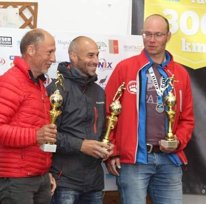
With Didier and Denis, we even managed to clinch the team/country prize, so France finishes first — between the three of us, we logged more kilometres than the other countries.
Above all, what I'll remember from this 6-day is the magnificent victory of the Englishman Dan Lawson. The Italian Tiziano Marchesi, who had led the race from the start and on whom I would have bet eyes closed, did indeed have a drop-foot issue the day before the finish. Right at the end. And that was enough for the Englishman to come back. Said Englishman had had a red, swollen Achilles tendon at the start of the race, but he managed it well. The 6-day is complicated. Being physically the best isn't enough. There are also two or three tactical choices that, at the end, make an enormous difference.
In any case, I keep a very fond memory of this race in Hungary. The whiners will say it was better before, but I'm past the age of listening to grumblers — it's bad for my blood pressure.
Looking forward to the next 6-day!